 Call Now
Get Expert Advice from Top Surgeons! Schedule Your Consultation.
Get the Best Pancreatic Cancer Treatment in Coimbatore at GEM Hospital
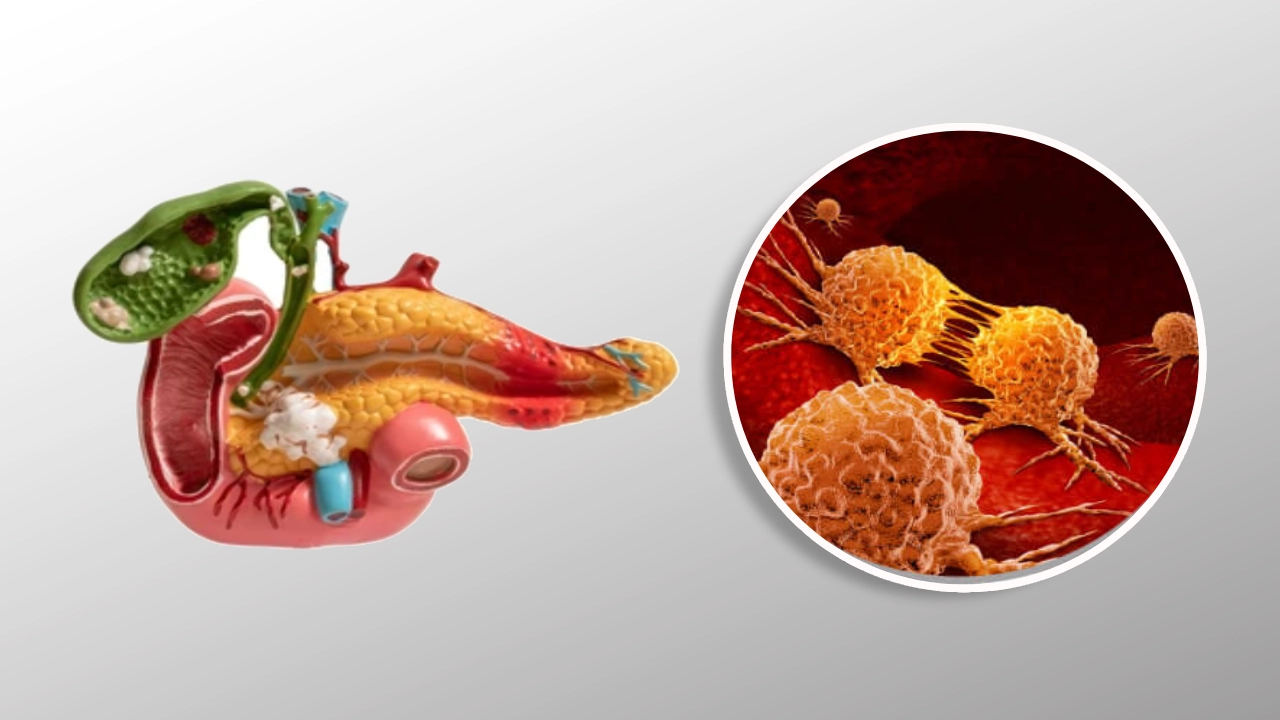
GEM Hospital offers specialized pancreatic cancer treatment in Coimbatore, focusing on comprehensive care, advanced medical technology, and a patient‑centric approach. Our specialized staff is committed to providing safe, advanced care and ensuring quick recovery for all patients.
Trusted Expertise
Precise Diagnostics
Advanced Treatments
Quality Care
24/7 Assistance
What Is Pancreatic Cancer, Exactly?
Your pancreas doesn’t get talked about much until something goes wrong with it, but it plays a vital role in digestion and blood sugar control. When issues arise, many patients begin to explore pancreatic cancer treatment in Coimbatore for proper care and guidance.
The challenging part is that early symptoms are often vague and easy to ignore, which is why timely diagnosis is critical in pancreatic cancer treatment in Coimbatore. Treatment usually involves a combination of surgery, chemotherapy, radiation, and targeted therapies based on the stage and condition, and early detection significantly improves outcomes.
Where Does Pancreatic Cancer Actually Come From?
Nobody can point to a single cause, but a few factors consistently show up in patients seeking pancreatic cancer treatment in Coimbatore.
Smoking is one of the biggest risks, along with poor diet, excess weight, chronic pancreatitis, and long-standing diabetes—all of which increase the need for timely pancreatic cancer treatment in Coimbatore. Genetics also plays a role, as family history and inherited conditions like BRCA1/2 mutations or Lynch syndrome can raise the risk. None of this means you’re certain to develop it, but if any of these apply to you, it’s better to seek expert advice and consider pancreatic cancer treatment in Coimbatore without delay.
Signs You Shouldn't Brush Off
This cancer is quiet at first, which is exactly why the signs it does give are worth paying attention to.
Losing weight without trying is one of the more common early flags. So is a dull, nagging ache in the upper belly that sometimes creeps toward the back, often worse after eating. If your skin or eyes start looking yellow, or your urine's gone dark while your stools have turned pale, that's jaundice and it usually means a bile duct is blocked, which needs attention fast. Nausea that won't quit, appetite dropping off, feeling full after just a few bites all worth mentioning to a doctor. And here's one people rarely connect: developing diabetes suddenly as an adult, out of nowhere, can sometimes be an early clue pointing toward the pancreas.
How We Figure Out What's Going On
Getting a fast, accurate diagnosis changes everything downstream, and it's a big part of what patients tell us they value about coming to GEM Hospital for pancreatic cancer treatment in Coimbatore.
CT Scan
Provides detailed 3D pictures of the pancreas and surrounding structures – often the first thing that reveals a tumor or blockage.
MRI
Picks up soft tissue detail that can catch tumors even at an early stage.
Endoscopic Ultrasound (EUS)
Uses a thin scope with an ultrasound probe to get right up close to the pancreas itself.
PET Scan
Lights up areas of unusual metabolic activity, which often means cancer is active there.
Blood Tests & Genetic Testing
Markers like CA 19‑9 and genetic profiling help both for diagnosis and for figuring out which treatments might work best.
Biopsy & ERCP
When we need tissue to confirm things directly, we do a fine‑needle biopsy guided by EUS; ERCP can diagnose and treat bile duct blockages in the same sitting.
Understanding the Stages
Doctors use the TNM system – tumor size and location, lymph node involvement, and distant spread. In plain terms:
Early Stage
Abnormal cells are still confined to the inner lining of the pancreatic ducts.
Localized
The tumor grows within the pancreas itself.
Regional Spread
The tumor reaches nearby lymph nodes.
Advanced (Metastatic)
The cancer spreads to distant organs like the liver or lungs.
Why bother knowing all this? Because your stage genuinely shapes what we recommend. Earlier stages often mean surgery is a real, curative option. More advanced cases usually call for surgery combined with chemo and radiation working together.
What Treatment Actually Looks Like
This is the part that overwhelms people most, so let's go through it plainly.
Surgery
The closest thing to a cure when the tumor's still localized – Whipple, distal pancreatectomy, or total pancreatectomy.
Chemotherapy
Strong medications to shrink tumors and slow them down – often the backbone for advanced cases, sometimes paired with radiation.
Radiation Therapy
Radiation itself uses focused, high-energy beams to target cancer cells directly, frequently working alongside chemo to shrink tumors and ease pain.
Targeted Therapy
Targeted therapy is a newer, more precise approach drugs built to exploit specific weaknesses in cancer cells, which can mean fewer side effects for the right patient.
Immunotherapy
Immunotherapy is still evolving in this space, but it works by training your own immune system to recognize and go after cancer cells, and early results in advanced cases have been genuinely encouraging.
Pain Management
Whatever else is happening, keeping you comfortable through medication, nerve blocks, or whatever the situation calls for stays a real priority for our team.
When Surgery Is the Right Call
For patients who qualify, catching things early really does widen what's possible surgically.
The Whipple procedure handles tumors in the head of the pancreas it's involved, removing part of the pancreas along with part of the duodenum, the bile duct, and sometimes part of the stomach and nearby lymph nodes. A distal pancreatectomy targets tumors in the tail or body of the pancreas, removing that section along with the spleen. A total pancreatectomy is the most extensive option, removing the entire pancreas along with several nearby structures rare, but sometimes it's the only path forward. There's also a newer, less invasive variation that blends techniques for select cases.
Generally, surgery makes the most sense when the cancer hasn't spread beyond the pancreas, and it's often paired afterward with chemo or radiation to reduce the chance of it coming back.
You're Not Doing This Alone
A diagnosis like this doesn't just hit the patient – it hits the whole family, and we try to hold space for that too.
Emotional Counseling
Support for the psychological weight of a cancer diagnosis.
Nutrition Guidance
Dietary advice to keep your body as strong as possible through treatment.
Patient Education
Clear, honest explanations so nothing feels like a mystery.
Support Groups
Connect with others who genuinely understand what you're going through.
On Chemotherapy
Chemo scares people, often more than it needs to once they understand what's actually involved.
Gemcitabine is one of the most commonly used drugs, often paired with others for stronger effect. FOLFIRINOX combines four different drugs and tends to come up for more advanced disease. Nab-paclitaxel is a slightly different formulation that can improve how the drug reaches tumor cells while sometimes easing side effects.
In earlier disease, chemo might work alongside surgery or radiation aiming for an outright cure. Further along, the goal often shifts toward slowing the cancer down and keeping you as comfortable and functional as possible.
It's fair to say chemo is tough on the body fatigue, nausea, hair loss are all real possibilities. What helps most is staying in close, honest conversation with your oncologist here so side effects get managed rather than just endured.
On Radiation Therapy
Radiation has genuinely improved as a tool here, and we use it thoughtfully.
External Beam Radiation: Standard approach for many cases.
SBRT (Stereotactic Body Radiation Therapy): Delivers stronger doses in fewer sessions with tight precision.
IGRT (Image‑Guided Radiation Therapy): Real‑time imaging lets us keep adjusting our aim throughout treatment.
High-energy beams go after cancer cells directly, shrinking tumors and slowing their spread. For more advanced cases, it can also meaningfully reduce pain and other symptoms. Paired with surgery and chemo, it tends to push overall outcomes higher.
On Prognosis
This is the question almost everyone eventually asks, and it deserves an honest answer rather than a vague one. A few things shape it most: how early things were caught, the tumor's specific characteristics and its relationship to nearby blood vessels, your overall health heading into treatment, and how your body responds once treatment starts. We go through all of this openly with our patients, because most people find that understanding what's ahead even when it's hard feels better than sitting with uncertainty.
More Than a Statistic
Numbers matter, but they don't capture any one patient's actual story, and we try never to treat them like they do.
Our approach is to really understand your specific case through thorough evaluation, walk you through every option honestly benefits and downsides both and stay present through the whole process with nurses, counselors, and support groups who show up when you need them.
Where the Field Is Headed
We keep an eye on what's new, because our patients deserve access to it.
Liquid Biopsies
Pick up tumor DNA circulating in the blood – showing real promise for catching this cancer earlier than ever.
Advanced Imaging
Sharper techniques help spot tumors sooner and understand them better.
Genetic & Molecular Profiling
Identifying markers that could eventually lead to much more personalized screening and treatment.
Targeted & Immunotherapies
New drugs and immune‑based approaches showing encouraging trial results.
Nanomedicine
Techniques that deliver drugs more precisely to tumor cells.
Minimally Invasive Surgery
Steadily improving laparoscopic and robotic techniques for faster recovery.
Living With It
A diagnosis like this reshapes daily life, but it doesn't have to swallow it whole.
Talk Honestly
Ask your doctor about your options and what to expect – stay involved in decisions.
Manage Side Effects
Address them as they come up instead of just gritting your teeth.
Maintain Routine
Hold onto whatever parts of your normal routine still bring you joy, even if they look a little different now.
Care for Yourself
Eat reasonably well, sleep properly, move gently, and find quiet through meditation or yoga if that's your thing.
Why Patients Choose GEM Hospital for Pancreatic Cancer Treatment in Coimbatore
We've built our reputation the slow way – one patient, one honest conversation at a time.
Our physicians and care team specialize specifically in pancreatic cancer, not general oncology dabbling. We invest in diagnostic and treatment technology that actually keeps pace with where the field is going. And we stay with you from that very first appointment through surgery, treatment, and everything after
If you or someone you love needs pancreatic cancer treatment in Coimbatore, we're ready to walk that road with you. Reach out and schedule a consultation – that first conversation is often the hardest step, and the one that matters most.